Source Constant Tension T Bolt Hose Clamp for Pipe, Turbo, Waterproof
Compare 30 listings for constant tension t bolt hose clamp from Tianjin, Shandong, and Zhejiang suppliers. Options include stainless steel, galvanized finishes, and custom sizes for pipe, waterproof, and turbo silicone hose applications.
Key considerations
Products List




Comprehensive Sourcing Guide
Strategic Sourcing Guide for Constant Tension T-Bolt Hose Clamps
Understanding the Product Category and Core Functionality
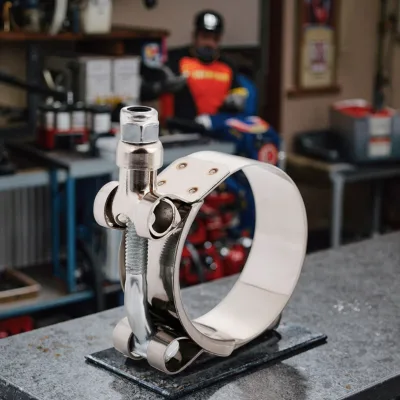
The constant tension T-bolt hose clamp represents a critical component in industrial fluid and gas transfer systems, designed to maintain secure connections despite thermal expansion, vibration, and pressure fluctuations. Unlike worm-drive clamps that rely on a single screw mechanism, the T-bolt design utilizes a sliding bolt mechanism that distributes clamping force evenly across the band. This structural configuration is particularly vital for applications involving high-pressure lines, turbocharger systems, and heavy-duty hydraulic circuits where standard clamps might fail under dynamic stress. The core functionality relies on the interaction between the stainless steel band and the T-shaped bolt, which allows for precise adjustment and sustained tension.
In the context of current market offerings, the product is frequently identified by variations such as "T-Bolt Hose Clamp," "Double Bolts Heavy Duty Hose Clamp," and "Adjustable Hydraulic Stainless." These nomenclatures reflect the specific mechanical configurations and intended use cases. The primary material observed in high-performance variants is stainless steel, which provides essential corrosion resistance and structural integrity in harsh environments. The surface treatment often includes galvanization to further enhance durability against moisture and chemical exposure. Buyers must recognize that while the fundamental design remains consistent, the specific application dictates the required band width, thickness, and bolt configuration.
Technical Specifications and Dimensional Standards
When evaluating T-bolt hose clamps, precise technical specifications are paramount to ensuring compatibility with existing piping and hose assemblies. The dimensional parameters typically include band width, band thickness, and the range of diameters the clamp can accommodate. Market data indicates a variety of standard dimensions, with band widths commonly observed at 19mm, 20mm, and 24mm. Band thicknesses vary based on the required holding force, with observed values ranging from 0.6mm for lighter applications to 1mm for heavy-duty scenarios.
The clamping range is another critical specification. Products are often categorized by their size capabilities, such as ranges from 35-40mm up to larger diameters, or specific intervals like 54-60mm to 165-173mm. Some manufacturers offer fully customizable sizes, allowing for adaptation to unique hose profiles that fall outside standard industrial norms. The measurement systems utilized include both Inch and Metric standards, necessitating careful verification to match the specific requirements of the target equipment.
The structural design also includes specific head types, with hexagon heads being a common feature to facilitate the use of standard wrenches for installation and adjustment. The connection method is frequently welding, which ensures a robust bond between the band and the bolt mechanism. Additionally, the product may feature a spring mechanism, known as a "T Bolt Clamp With Spring," which aids in maintaining tension during thermal cycling. Buyers should verify the "prod_standard" and "prod_model" details to ensure the specific variant aligns with their engineering drawings and pressure requirements.
Compliance, Material Verification, and Certification Checks
Ensuring that the supplied clamps meet necessary material and quality standards is a fundamental step in the procurement process. The primary material observed is stainless steel, with specific references to grades such as W2 201 Stainless steel. While "Standard" is a generic designation found in product listings, buyers must explicitly request the specific grade certification (e.g., 304, 316, or 201) to verify corrosion resistance and tensile strength. The term "Standard" in product attributes often refers to the manufacturing process or general compliance rather than a specific international standard code, requiring further clarification from the supplier.
Surface treatment is another area requiring verification. Galvanization is a common process noted in the supply chain, intended to protect the metal from rust and degradation. However, the thickness and quality of the galvanization layer can vary significantly between suppliers. Buyers should request mill test reports or surface treatment certificates to confirm the coating quality and thickness.
Regarding certifications, while the provided data does not list specific third-party certifications (such as ISO 9001 or specific industry approvals), the presence of OEM acceptance and customization options suggests that suppliers are capable of adhering to client-specific quality protocols. It is imperative for buyers to ask for evidence of compliance with relevant industry standards for the specific application, such as automotive or hydraulic fluid standards. The "Standard" attribute listed as "Full sizes" or "All Size" in some contexts likely refers to the availability of the product line rather than a technical standard code, and should not be assumed to imply compliance without explicit documentation.
Cost Drivers and Pricing Dynamics
The pricing of constant tension T-bolt hose clamps is influenced by several distinct factors, primarily material costs, manufacturing complexity, and order volume. The observed price range in the market spans from 0 to 5.6 USD per unit, though this wide variance often reflects differences in unit size, material grade, and order quantity. The Minimum Order Quantity (MOQ) is a significant driver, with observed ranges spanning from 50 to 2000 units. A specific listing indicates an MOQ of 100 PCS, while another suggests 500 PCS for specialized heavy-duty variants.
Material composition is a primary cost determinant. Stainless steel, particularly grades with higher corrosion resistance, commands a premium over standard carbon steel or lower-grade stainless options. The thickness of the band also impacts cost; a 1mm thick band requires more raw material and processing time than a 0.6mm band, directly influencing the unit price. Furthermore, the customization level affects pricing. Products with "Customized" labels or specific size requirements often incur higher tooling and setup costs, which are reflected in the final price.
The packaging method also plays a role in the overall cost structure. Options such as "Poly Bag+Carton," "Plastic Bags and Cardboard Boxes," or "Carton and Pallet" vary in material cost and labor intensity. Bulk packaging on pallets may reduce per-unit shipping costs but could increase the initial order value. Buyers should analyze the total landed cost, including packaging and shipping, rather than focusing solely on the unit price, especially when dealing with the lower end of the price spectrum where quality trade-offs may exist.
Typical Applications and Industry Use Cases
The versatility of the T-bolt hose clamp allows it to serve a wide array of industrial applications. The primary use cases identified include pipe clamping, waterproofing systems, and supermarket infrastructure. In the automotive sector, these clamps are essential for turbo silicone hose applications, where they must withstand high temperatures and significant pressure fluctuations. The "Double Bolts Heavy Duty Hose Clamp" variant is specifically noted for its suitability in these demanding environments, providing the necessary stability to prevent hose detachment.
Beyond automotive, the clamps are utilized in heavy-duty clamp applications for general piping systems. The "Suspension Clamp" structure suggests use in overhead piping or scenarios where the clamp must support the weight of the hose and fluid. The "Adjustable Hydraulic Stainless" designation points to use in hydraulic systems where precise tension control is required to prevent leaks under high pressure. The "Min Hose Clamp" and "T Bolt Clamp With Spring" variants offer solutions for applications requiring minimal profile or automatic tension adjustment.
The application list also includes "Supermarket," which may refer to refrigeration lines or fluid transfer systems within retail infrastructure. The ability to customize the product, as indicated by the "Customization: Available" and "OEM: Accepted" attributes, allows manufacturers to tailor clamps for niche applications, such as specialized chemical processing or custom machinery. Buyers should match the specific application requirements, such as temperature range and fluid type, with the material and structural specifications of the clamp.
Supplier Evaluation and Quality Control Protocols
Selecting a reliable supplier for T-bolt hose clamps requires a rigorous evaluation process that goes beyond simple price comparison. The geographic origin of the products is a key factor, with observed production locations including Tianjin, Shandong, and Zhejiang in China. Each region may have different manufacturing capabilities and quality control standards. Buyers should verify the specific "Place of Origin" and ensure the supplier has a proven track record in the specific region of production.
Quality control should focus on verifying the consistency of the manufacturing process. The "Condition: New" attribute is a basic requirement, but buyers must also inspect for defects in the welding, galvanization, and threading of the T-bolt. The "Technics: Casting" attribute suggests that some components may be cast, which requires careful inspection for porosity or structural weaknesses. Buyers should request samples to test the clamping force, corrosion resistance, and dimensional accuracy against the specified band width and thickness.
The "prod_packing" and "prod_model" details should be cross-referenced with the physical samples to ensure consistency. A supplier offering "Carton and Pallet" packaging should demonstrate that the products remain undamaged during transit. Additionally, the ability to accept OEM requests and provide customized labels indicates a supplier's flexibility and attention to detail. Buyers should establish clear communication channels to verify that the supplier can consistently meet the "Standard" and "prod_standard" requirements, particularly when dealing with custom sizes or specific material grades.
Long-Term Procurement and Supply Chain Considerations
Sourcing T-bolt hose clamps involves more than a one-time purchase; it requires a strategy for long-term supply chain stability. The availability of "Full sizes" and "All Size" options suggests that suppliers may have extensive inventories, but buyers should confirm lead times for custom orders. The "MOQ" of 100 PCS or 500 PCS may vary based on the specific model and customization level, so buyers should negotiate flexible terms to accommodate fluctuating demand.
The "Customization: Available" and "OEM: Accepted" attributes highlight the potential for long-term partnerships where the supplier can adapt to evolving product designs. However, this requires clear documentation of specifications to avoid errors in production. Buyers should also consider the lifecycle of the product; stainless steel clamps are designed for longevity, but the quality of the galvanization and welding will determine their service life. Regular quality audits and periodic sample testing are recommended to ensure that the supplier maintains consistent quality over time.
Furthermore, the "Product Name" variations, such as "T-Bolt Hose Clamp" versus "Adjustable Hydraulic Stainless," indicate that the market offers a diverse range of products. Buyers should maintain a standardized naming convention in their procurement system to avoid confusion and ensure that the correct specifications are ordered. By focusing on technical verification, supplier reliability, and clear communication, buyers can secure a steady supply of high-quality constant tension T-bolt hose clamps that meet their operational needs.
| Specification Category | Observed Values | Verification Requirement |
|---|---|---|
| Material | Stainless Steel, W2 201 | Request specific grade certification (e.g., 304, 316) |
| Band Width | 19mm, 20mm, 24mm | Confirm against hose diameter and pressure rating |
| Band Thickness | 0.6mm, 1mm | Verify based on required clamping force |
| Size Range | 35-40mm to 165-173mm | Check compatibility with specific hose assemblies |
| Surface Treatment | Galvanized | Request coating thickness and quality reports |
| MOQ | 50, 100, 500, 2000 PCS | Negotiate based on inventory and demand forecasts |
| Origin | Tianjin, Shandong, Zhejiang | Verify supplier location and manufacturing capacity |
| Packaging | Poly Bag, Carton, Pallet | Ensure protection during transit and storage |
FAQs
What materials are used for constant tension t bolt hose clamp?
Stainless steel is the primary material used for these clamps, often with galvanization for surface treatment. Specific grades like W2 201 Stainless steel are observed in listings to ensure corrosion resistance and structural integrity in harsh environments.
Which dimensions are available for constant tension t bolt hose clamp?
Band widths typically range from 19mm to 24mm, with thicknesses varying between 0.6mm and 1mm. Clamping sizes cover ranges such as 35-40mm up to 165-173mm, and fully customized sizes are acceptable for unique hose profiles.
How is the constant tension t bolt hose clamp customized?
Customization is available for product labels, specific sizes, and OEM branding. Suppliers accept custom requests for band dimensions and can adapt the product to meet specific application requirements like turbo silicone hose or hydraulic systems.
What is the minimum order quantity for constant tension t bolt hose clamp?
The minimum order quantity varies by supplier, with observed values ranging from 100 to 500 pieces. Some listings specify 100 PCS as a baseline, while specialized heavy-duty variants may require 500 PCS for order placement.
Where are constant tension t bolt hose clamp manufacturers located?
Manufacturers are primarily located in China, with specific origins including Tianjin, Shandong, and Zhejiang. These regions host factories capable of producing stainless steel clamps with various surface treatments and packaging options.
Can constant tension t bolt hose clamp be used for turbo systems?
Yes, these clamps are specifically designed for turbo silicone hose applications where high pressure and temperature fluctuations occur. The double bolt heavy-duty design ensures stability and prevents hose detachment in demanding automotive environments.